24 Song Title Ideas and How to Make Your Own
Explore 24 song title prompts for love, heartbreak, growth and late nights. Learn to build a title from an image, action or hook and test it aloud.
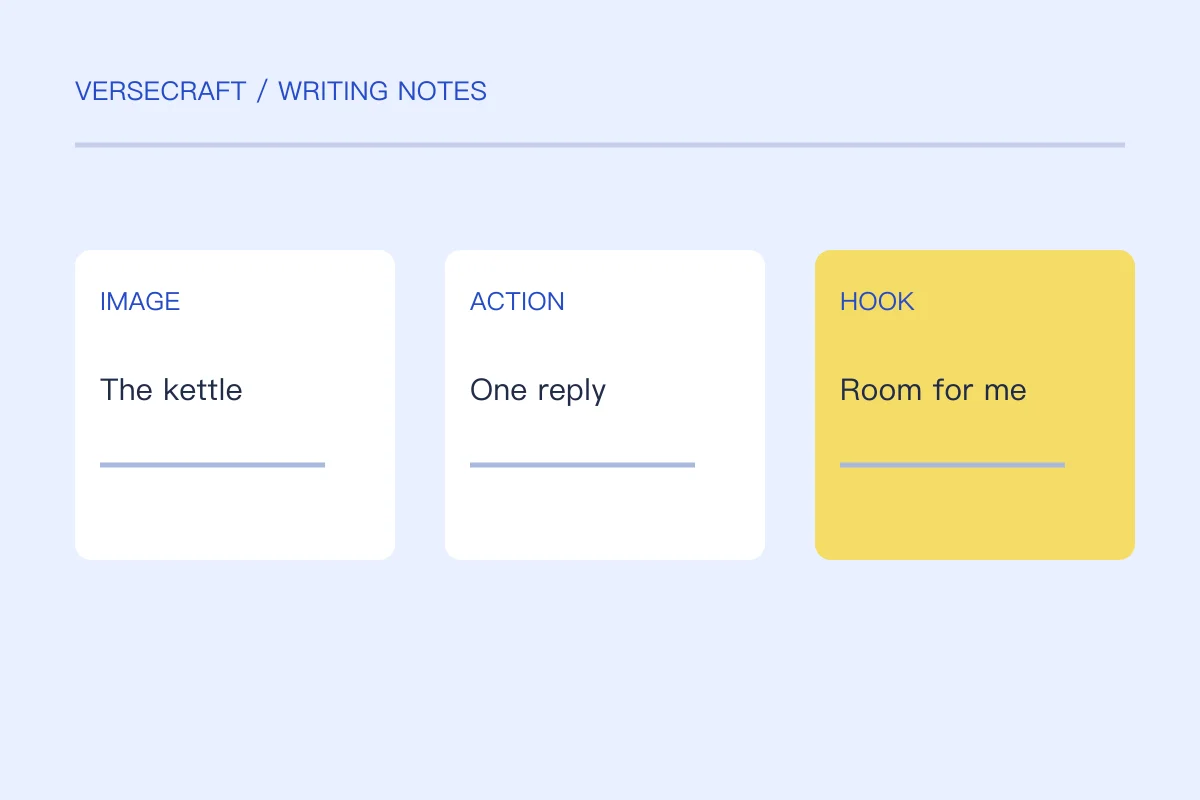
A useful song title gives your lyric a center. It might name the chorus hook, focus attention on a specific object or create a question the verse answers. Start with the song’s actual situation, make several candidates, and choose the phrase that still feels right when spoken and sung.
The 24 titles below are writing prompts created for this guide. They have not been checked against every released song, and a suggestion is not a guarantee that a title is unused. Adapt the wording to your own story.
Love and everyday care
- The Kettle On Again
- Your Side of Tuesday
- A Chair Beside the Door
- Two Mugs Before Sunrise
- Room in Your Morning
- Where You Leave the Light
These prompts work best when the verse supplies a real gesture. “Two Mugs Before Sunrise” could concern two people with different shifts; “Your Side of Tuesday” could be about a small recurring ritual. Pick the relationship first, then decide whether the phrase belongs to it.
Heartbreak and unfinished conversations
- The Last Unsent Weather Report
- Your Key in My Winter Coat
- A Different Way Home
- The Empty Half of Sunday
- What the Hallway Kept
- No Forwarding Address
Avoid treating a sad title as a complete premise. Ask what happens next. Does the singer return the key, keep it or finally notice they are still carrying it? Each action points toward a different chorus.
Growth, courage and starting again
- One Reply Before Midnight
- Learning the New Street
- Smaller Than a Promise
- The Box I Didn’t Label
- Tomorrow in My Pocket
- A Window I Can Open
You can turn an abstract subject into an action. Instead of telling the listener the singer is “brave,” show the message they finally send or the unfamiliar route they take. A title can hold that action without explaining the entire lesson.
Late nights and city stories
- Coins for the Last Bus
- Neon on My Work Shoes
- The Corner After Closing
- A Laundromat at 2:10
- Window Seat, No Destination
- The Street That Knows My Shift
A setting earns its place when it affects the singer. The laundromat might provide unexpected company or space for an honest conversation. If changing the place changes nothing about the song, look for a more meaningful image.
Six ways to find a title inside your own lyric
Lift the strongest spoken phrase. Read the draft aloud and mark a short sentence you naturally emphasize. A title does not need to sound like a slogan.
Name an object with a role. A coat, key or cup becomes interesting when the singer keeps, returns or avoids it. Add enough context to distinguish the image without summarizing the whole plot.
Pair a place with a time. “The Corner After Closing” suggests an atmosphere and a point in the day. The verse still needs to establish why someone is there.
Use a believable action. “One Reply Before Midnight” creates movement and a small deadline. It can lead a verse toward a decision rather than a general mood.
Find the contradiction. Ask what the singer wants and what stands against it: leaving while wanting to belong, being together with mismatched hours, or keeping something in order to let it go. State that tension in your own words.
Listen for the repeated phrase. Your chorus may already contain its best title. If so, test it before inventing a separate, more elaborate name. The chorus guide explains how repetition can carry the central idea.
Compare three candidates instead of collecting fifty
Choose a working title and two alternatives. For each one, answer these questions:
- What particular scene or question does it suggest?
- Can I explain its relationship to the chorus in one sentence?
- Does it sound like language this singer would use?
- Can I sing it naturally in the phrase where it might appear?
“The Kettle On Again” and “Room in Your Morning” could name the same draft, but they focus the listener differently. Try each before the first verse and see which expectation the lyric actually fulfills.
Searching your shortlist can help you understand how widely a phrase is already used. It does not guarantee legal clearance or uniqueness. For a working demo, keep the title flexible while you finish the lyric; for a release, do the checks appropriate to your project.
Use a generator with a specific brief
In the song title workbench, describe the scene and what you want the title to do: “A warm pop song about opposite shifts; recurring image: a kettle; suggest short conversational titles; avoid stars, destiny and forever.” A specific brief gives you a more useful set to edit.
If the song is still only a mood, start with songwriting prompts or the beginner lyric worksheet. A name can guide a draft, but it cannot replace the situation beneath it.
Does the title have to appear in the chorus?
No. Repeating it can create a clear connection, but an image or phrase outside the chorus can also name the song. Make the relationship understandable through the lyric.
How long should a song title be?
There is no universal ideal. A short phrase may be easy to remember; a longer title can carry a distinctive situation. Choose clarity, pronunciation and relevance over a fixed word count.
Further study: Berklee Online’s Writing from the Title course description outlines title-led lyric development. The prompts and selection exercise here are independently written.