How to Write Song Lyrics: A Beginner’s Guide
Learn how to write song lyrics from one clear idea. Follow a complete verse-and-chorus example, a practical worksheet and a simple revision checklist.
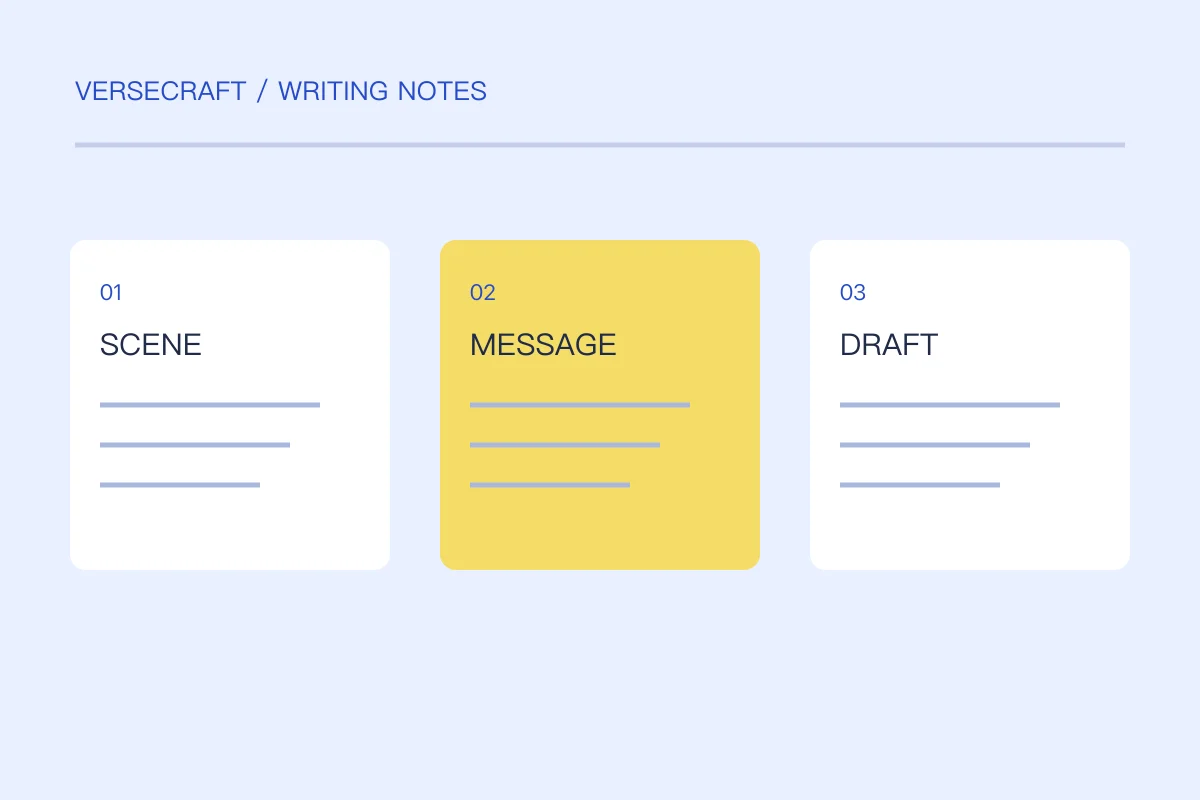
To write song lyrics, choose one situation, decide what it means to the singer, and build a verse that leads to a repeatable chorus. Then speak or sing the words to a steady pulse and revise the parts that feel awkward. You can start before you know music theory or have a finished melody.
This guide takes one small idea through a complete first draft. All lyric examples are original teaching exercises. They are starting points for your own writing, rather than lyrics taken from released songs.
1. Give the song a clear point of view
“Growing up” is a subject. “I am packing my first apartment and realizing that leaving does not erase belonging” is a song premise. A premise gives the singer something to notice, want and decide.
Fill in three blanks: I am speaking to _, after _, because I need to say ___. For our example: I am speaking to my younger self, after moving out, because I need to say that home can travel with me.
Keep the listener in that conversation. Switching from “you” meaning a former partner to “you” meaning the audience can work, but make the change deliberate. If you cannot explain who is being addressed, simplify the draft before adding rhymes.
2. Collect details before writing lines
Make a short inventory of what the scene contains: a blue mug, a key that sticks, a refrigerator hum, a box labeled “kitchen.” Choose details that reveal a relationship or decision. An object becomes useful when something happens to it.
“I feel sad about leaving” names the feeling. “I wrap your chipped blue mug in yesterday’s news” gives the singer an action. Neither approach is forbidden; placing the action in a verse gives the chorus room to state the larger meaning.
Write a paragraph without trying to rhyme. Underline two objects and one action you would keep even if you changed the genre. Those are the foundations of your lyric, and they will help you reject generic suggestions later.
3. Write the chorus message in ordinary language
Ask what the listener should understand when the chorus returns. Our answer is “I can leave the address without losing the people.” Shorten that into several possible hooks:
- Home comes with me.
- More than an address.
- I keep the light you gave me.
Say each phrase twice. A useful hook should still sound like something this singer would say. For a deeper revision process, use the chorus-writing guide.
4. Give each section a different job
Start with verse, chorus, verse, chorus. A bridge is optional. In verse one, show the departure; in verse two, show the first unfamiliar evening. The repeated chorus can connect both moments.
Here is a compact original draft:
[Verse 1]
I wrap the blue mug twice in news
The kitchen clock is running slow
Your spare key waits beside my shoes
There’s one more box before I go
[Chorus]
Home comes with me when I leave
In every small thing that I keep
A different street, the same old light
I carry through a stranger’s night
This draft has a consistent scene and a clear central phrase. It still needs a melody, and “a stranger’s night” might feel less direct than the rest. A revision could replace that line with “You’re with me when I turn the key,” then test whether its rhythm and meaning fit better.
The point of a first draft is to expose choices. A neat rhyme does not make every line final. See the song structure guide when you need to add or remove sections.
5. Revise meaning, rhythm and rhyme separately
On the first pass, cross out anything that changes the subject without helping it develop. On the second, read the lyric aloud over a steady pulse. Notice rushed consonants, unnatural word stress and places where you need a breath.
On the third pass, check the line endings. Keep a near rhyme or an unrhymed line if the alternative makes the singer speak unnaturally. Our rhyme scheme examples show how different patterns organize a stanza.
An automatic syllable count can reveal an unusually crowded line. It cannot decide how many notes you should sing. Record a rough voice memo, listen away from the page, and mark the words you struggle to understand.
A worksheet for your first song
- Describe one scene in three plain sentences.
- Choose the singer, listener and immediate situation.
- Write three versions of the central message.
- Turn four concrete observations into a verse.
- Write a short chorus around one chosen hook.
- Draft a second verse that adds new information.
- Speak the whole lyric aloud and revise one problem at a time.
Use the lyrics maker to organize a topic, genre and mood, or explore songwriting prompts if the scene is still missing. AI generation depends on service availability; you can work with the example editor and export a text copy while it is unavailable.
Common questions
Should I write lyrics or melody first?
Either can work. With lyrics first, keep the wording flexible until you sing it. With melody first, note the places where important words need to land and write into those phrases.
Does every line need to rhyme?
No. Repetition, images, rhythm and narrative can also hold a song together. Use rhyme to connect ideas, and change a line when the rhyme is making the decision for you.
Further reading: Andrea Stolpe’s Berklee Online introduction to lyric writing discusses sensory detail and conversational language. The worksheet and sample draft above are Versecraft’s original examples.